ChoreMint

Role

Product Designer · UX/UI Designer

(End-to-end UX strategy, interaction design, system design)

Platform

iOS Mobile App (MVP)

Timeline

Sep 2025 – Nov 2025

Team

1 Designer, 2 Developers

ChoreMint Hero

Why do household chores fail to become

consistent habits for children?

ChoreMint is a family-focused chore and allowance platform designed to help children build responsibility through consistent, rewarding routines—not forced compliance.

While many chore systems rely on checklists and parental control, ChoreMint reframes chores as a motivational and behavioral experience. By combining clear task structures with visual rewards and progress feedback, the product helps children understand why chores matter and how small actions accumulate into long-term habits.

This project explores how thoughtful UX design can transform everyday obligations into engaging routines—aligning parental expectations with children's intrinsic motivation.

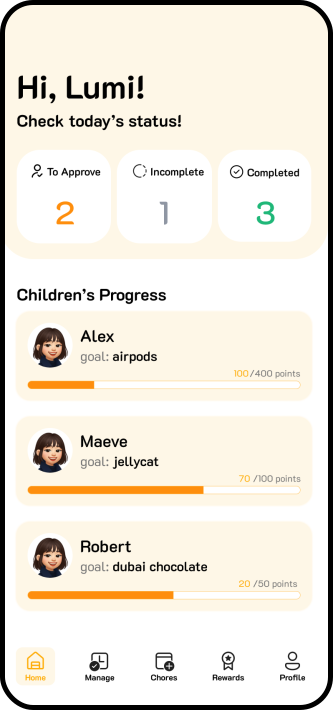
Parent Home Screen
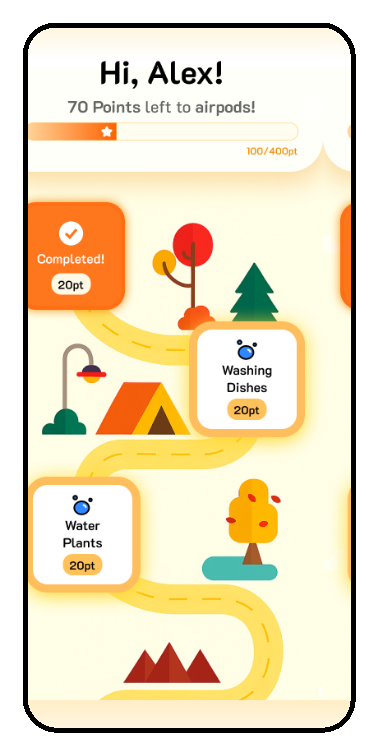
Child Home Screen
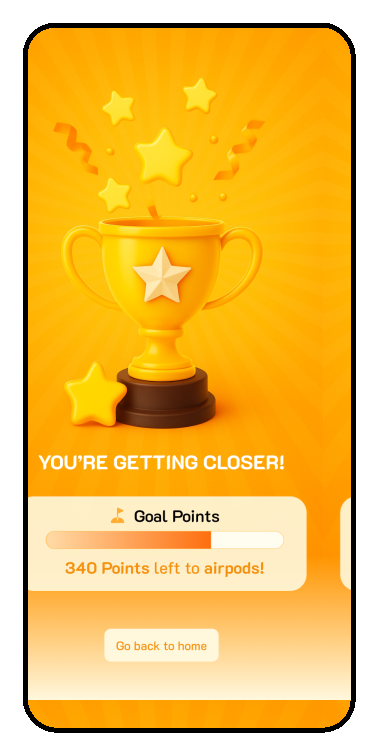
Game System Screen

Overview

ChoreMint is a chore and allowance management app designed to reduce emotional friction between parents and children by transforming chores from nagging into a system-driven experience.

Instead of relying on reminders, charts, or parental enforcement, ChoreMint creates a clear loop where chores, progress, and rewards are consistently connected—helping children build autonomy while reducing parental emotional labor.

Problem Space

Everyday chores are inevitable.

The problem is how they are experienced.

From research, household chores frequently lead to conflict not because tasks are difficult, but because expectations, completion criteria, and rewards are unclear.

Key pain points identified:

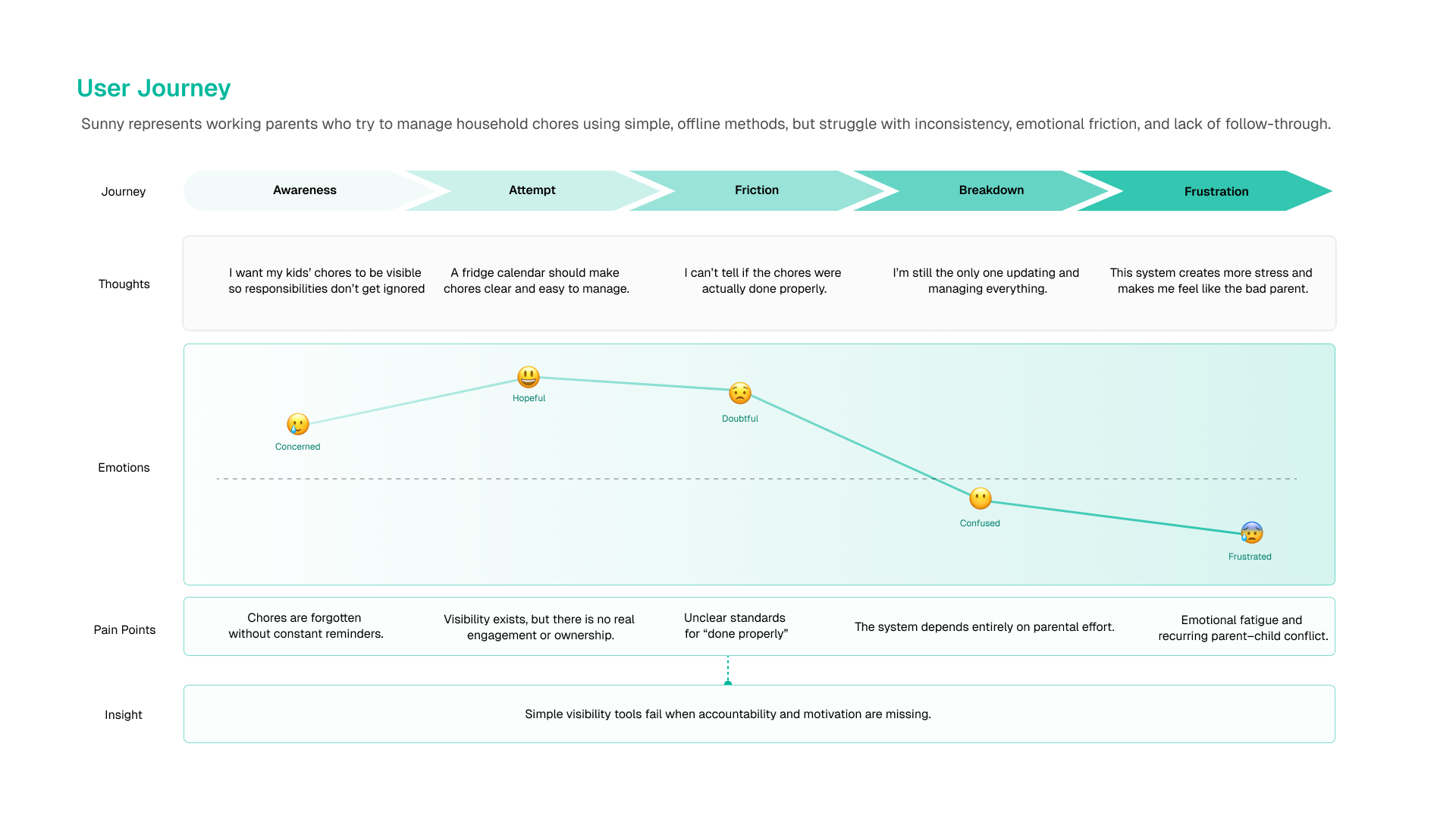
  • Parents carry the full burden of tracking, checking, and rewarding
  • Children perceive chores as forced obligations
  • Traditional chart- or sticker-based systems fail after short-term use

Research & Key Insights

Research Methods

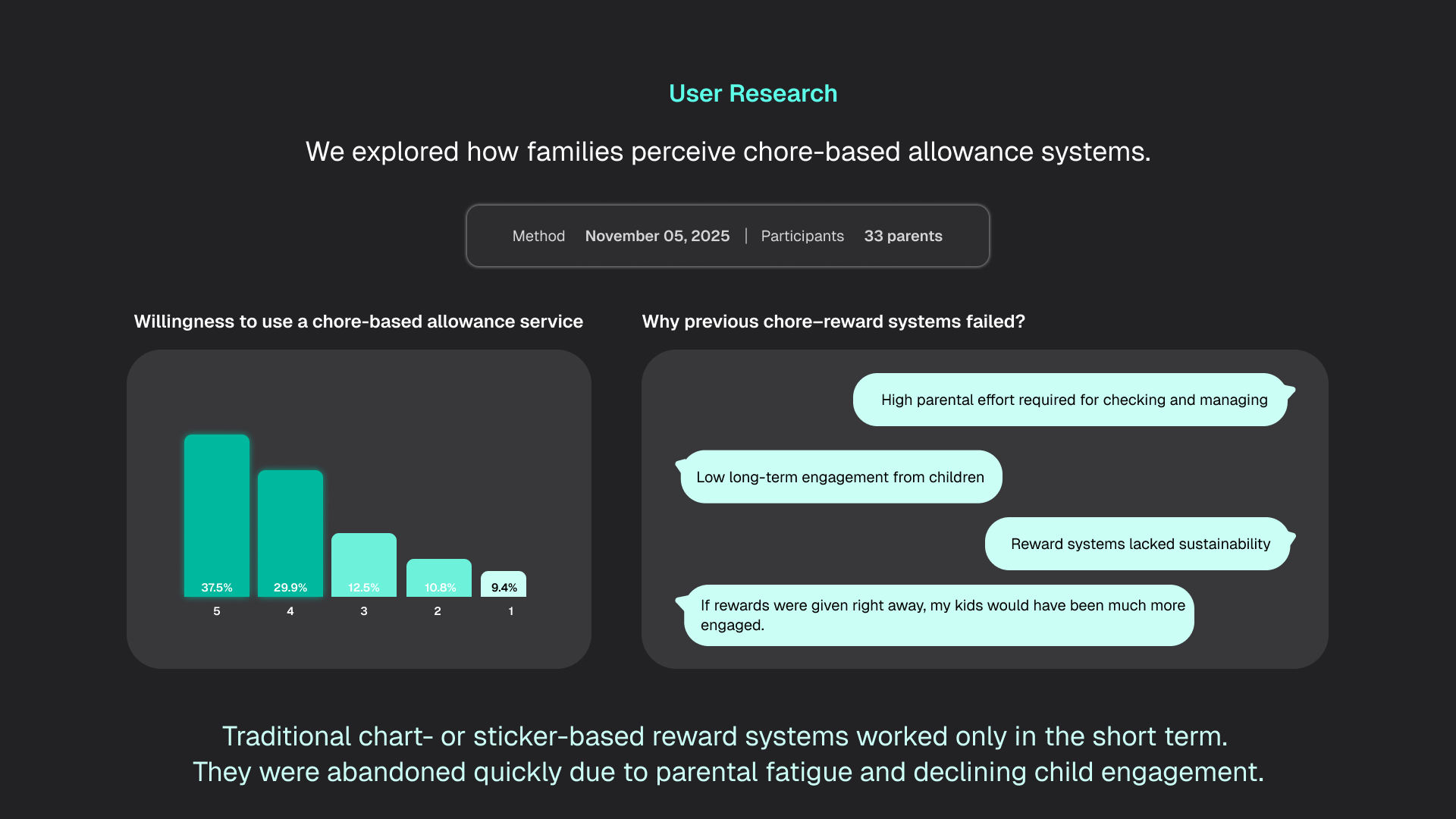
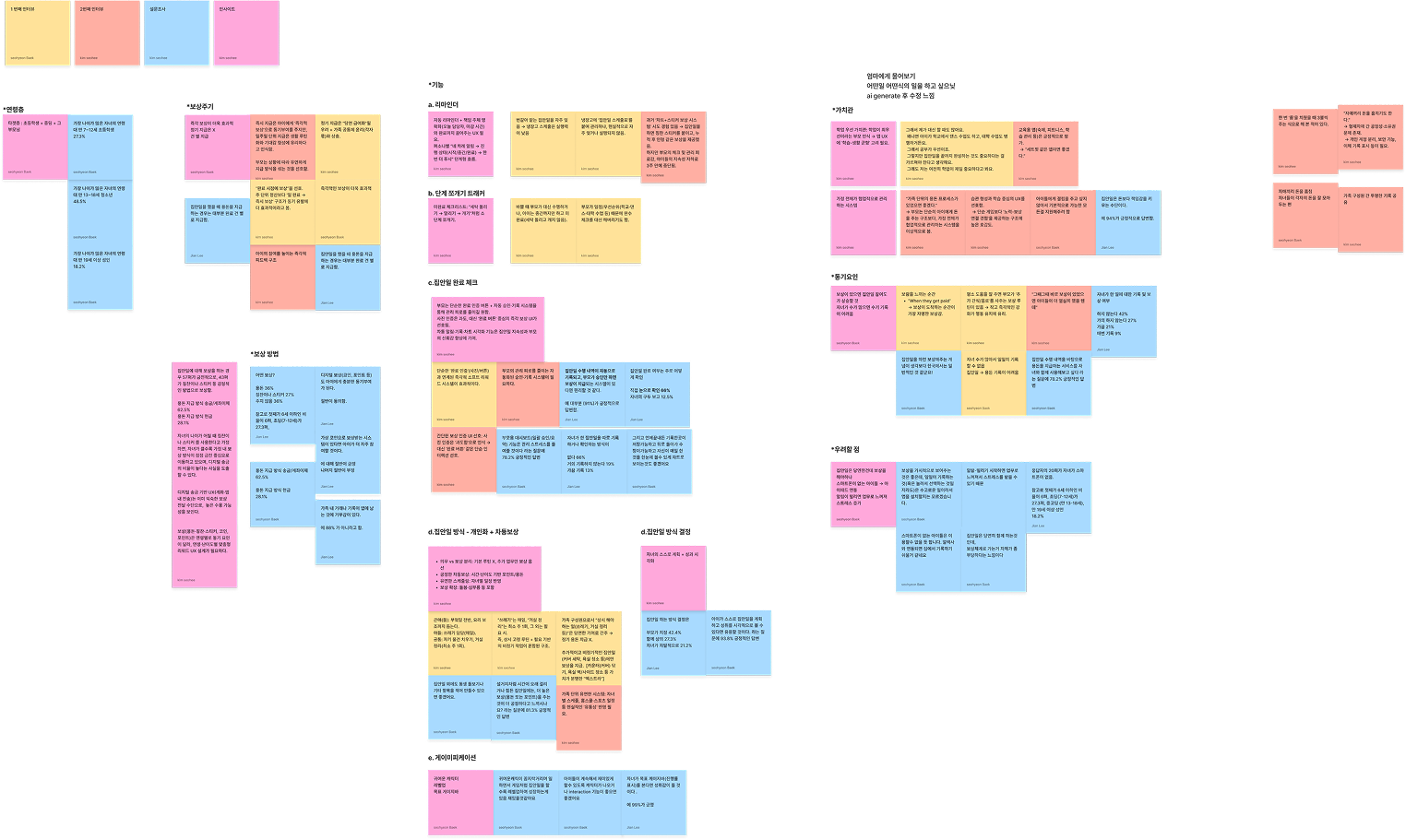
  • Parent Survey — 33 participants (Nov 5, 2025)
  • In-depth Interviews — 3 parents (Nov 7, 2025)
User Research
Survey Results Chart

Key Findings

  • Manual tracking systems require high parental effort
  • Delayed rewards weaken motivation
  • Visibility without accountability increases frustration

"The chart system worked for a while, but it took too much of my time to manage."

"If rewards were given right away, my kids would have been more engaged."

Interview Quotes Slide

Design Insight & Hypothesis

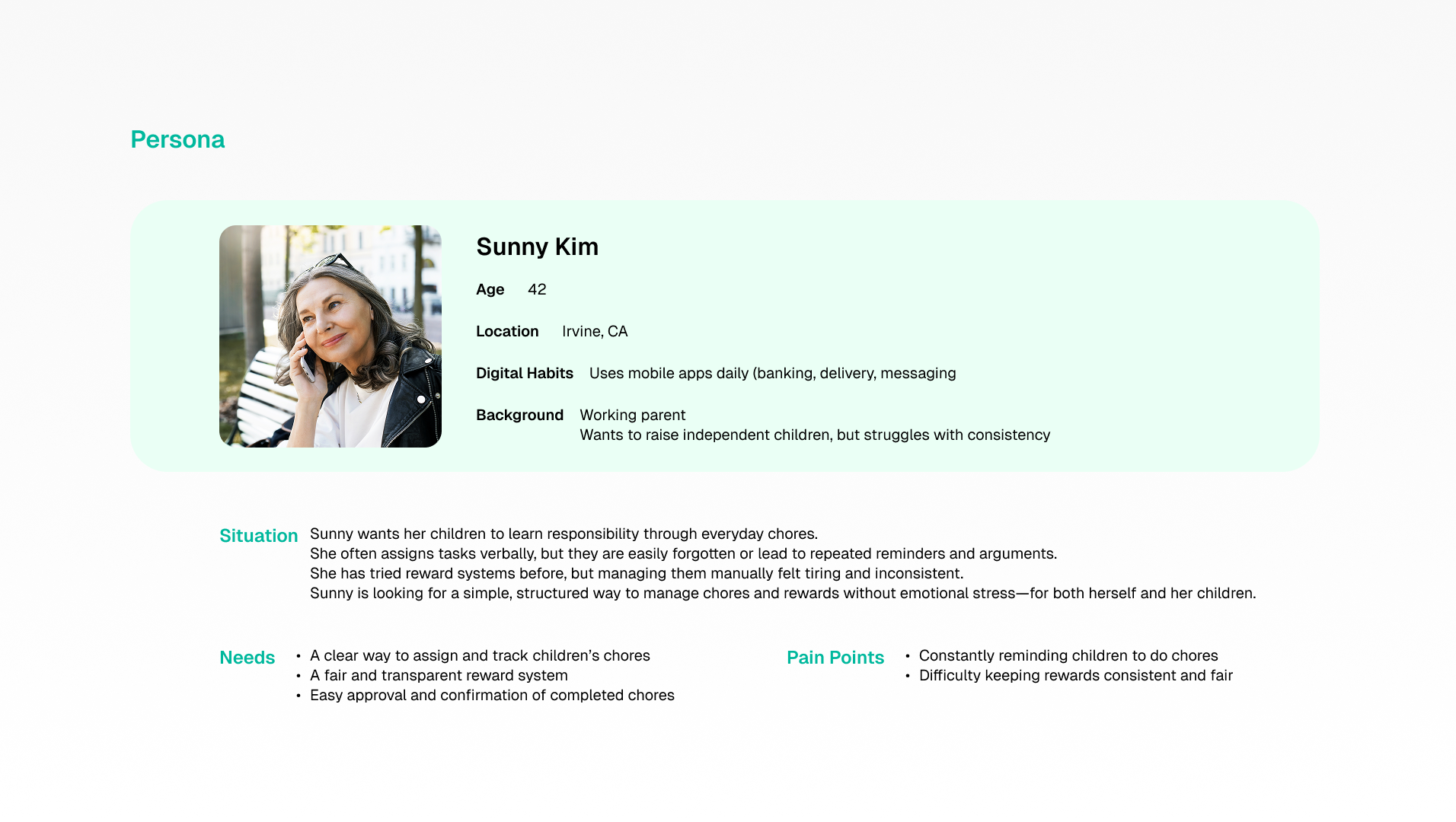
Persona User Journey

Core Insight

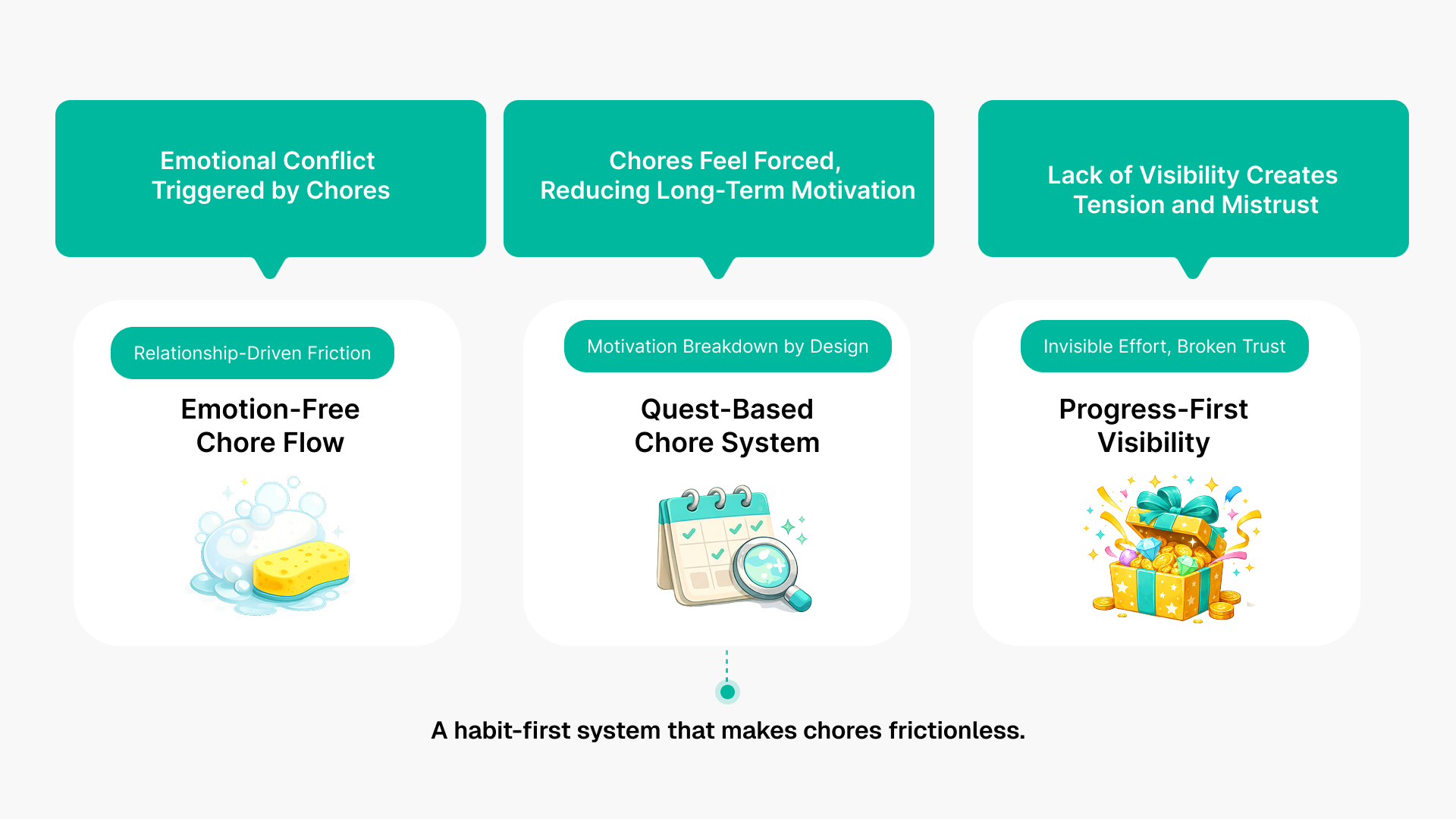
Managing chores and allowances is a multi-variable behavioral problem, not a task-list problem.

Design Hypothesis

If chores are designed as a clear, reward-driven system with immediate feedback, children will participate more actively, and parents will experience less emotional friction.

Insight → Direction Diagram

Core User Flow

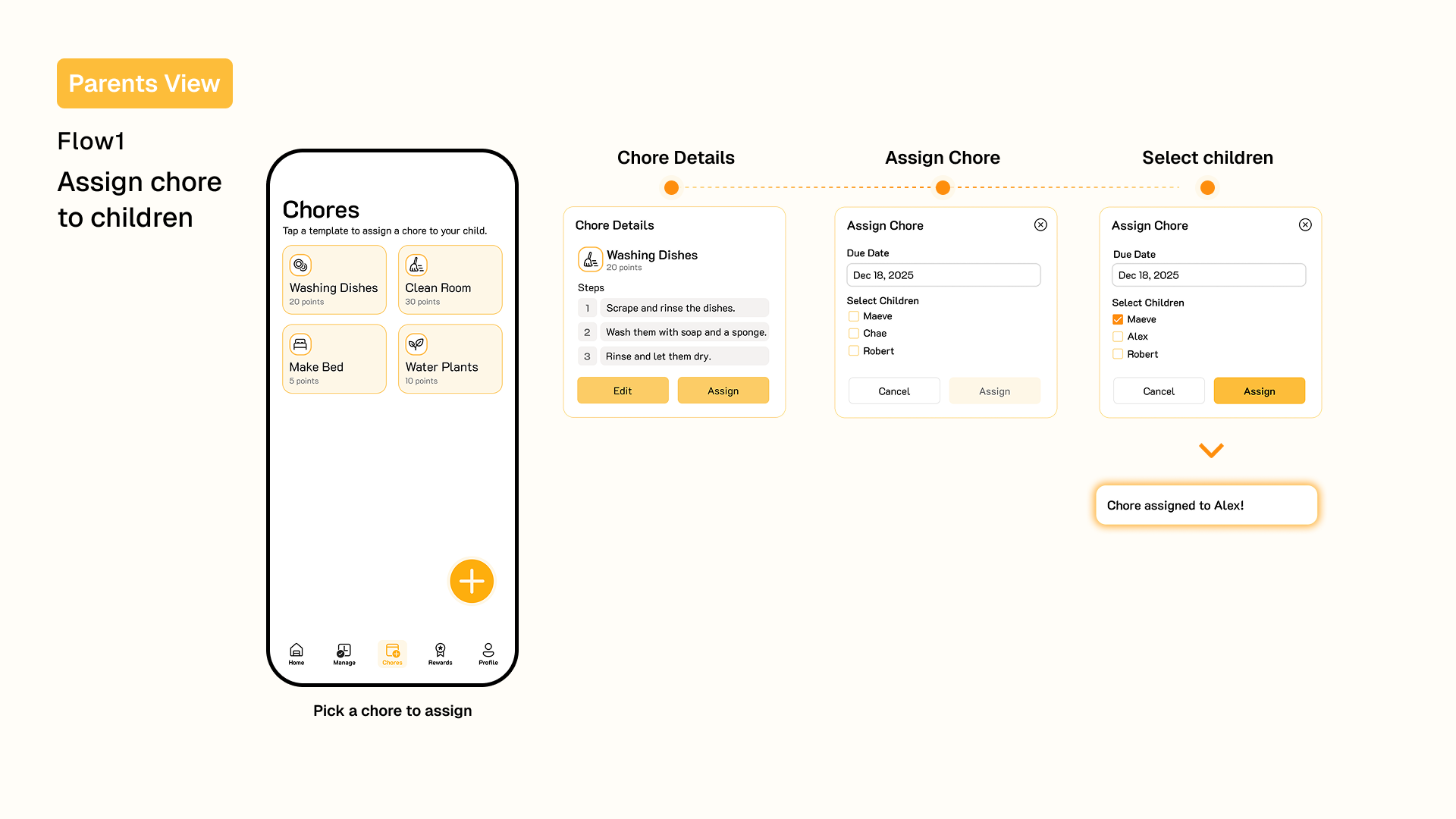
Parent assigns chores

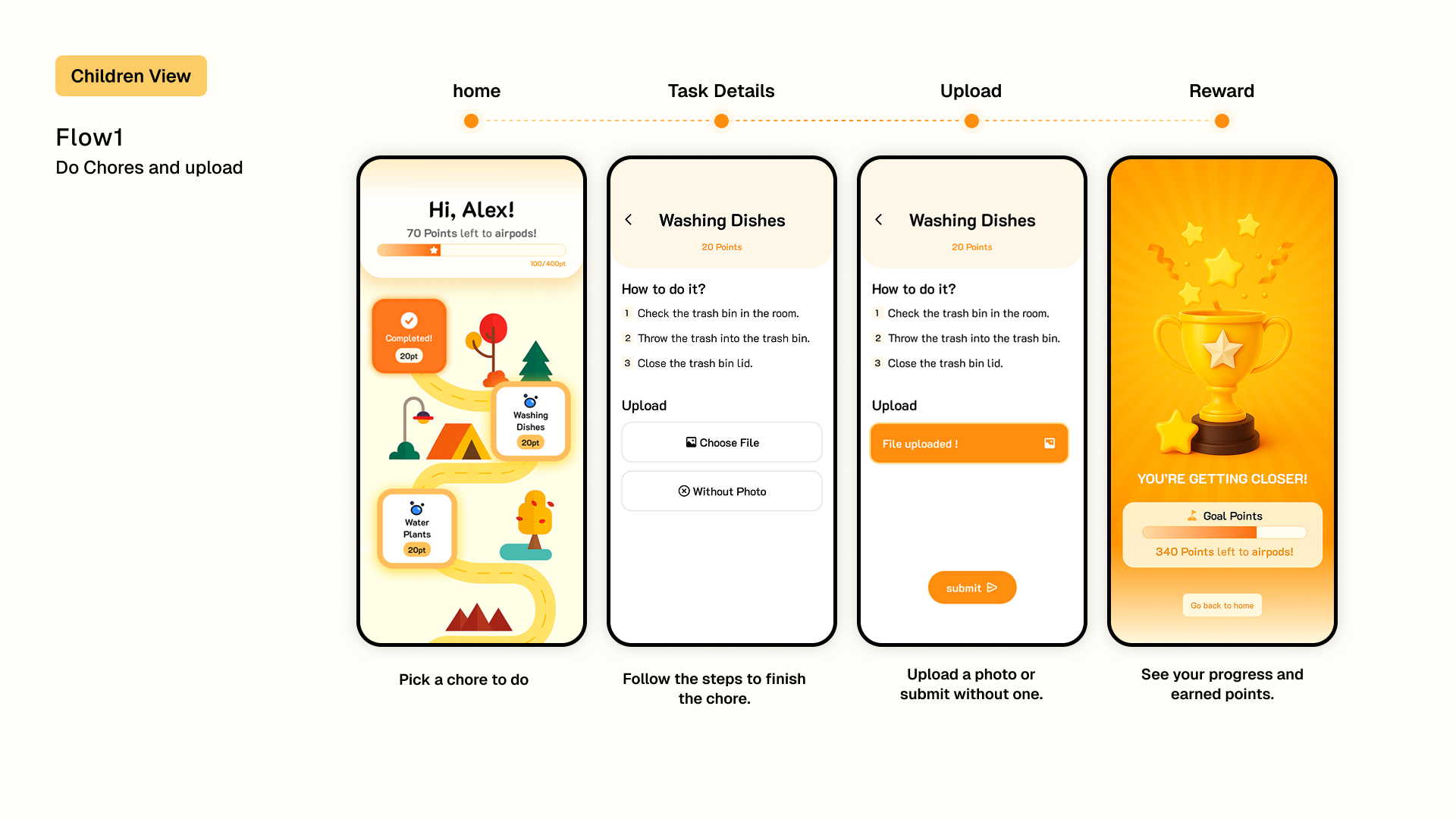
→ Child completes tasks

→ Progress is visualized instantly

→ Rewards are triggered

→ Habits are reinforced

ChoreMint was intentionally designed as a closed behavioral loop, minimizing the need for parental intervention.

Parent Flow Child Flow

Information Architecture

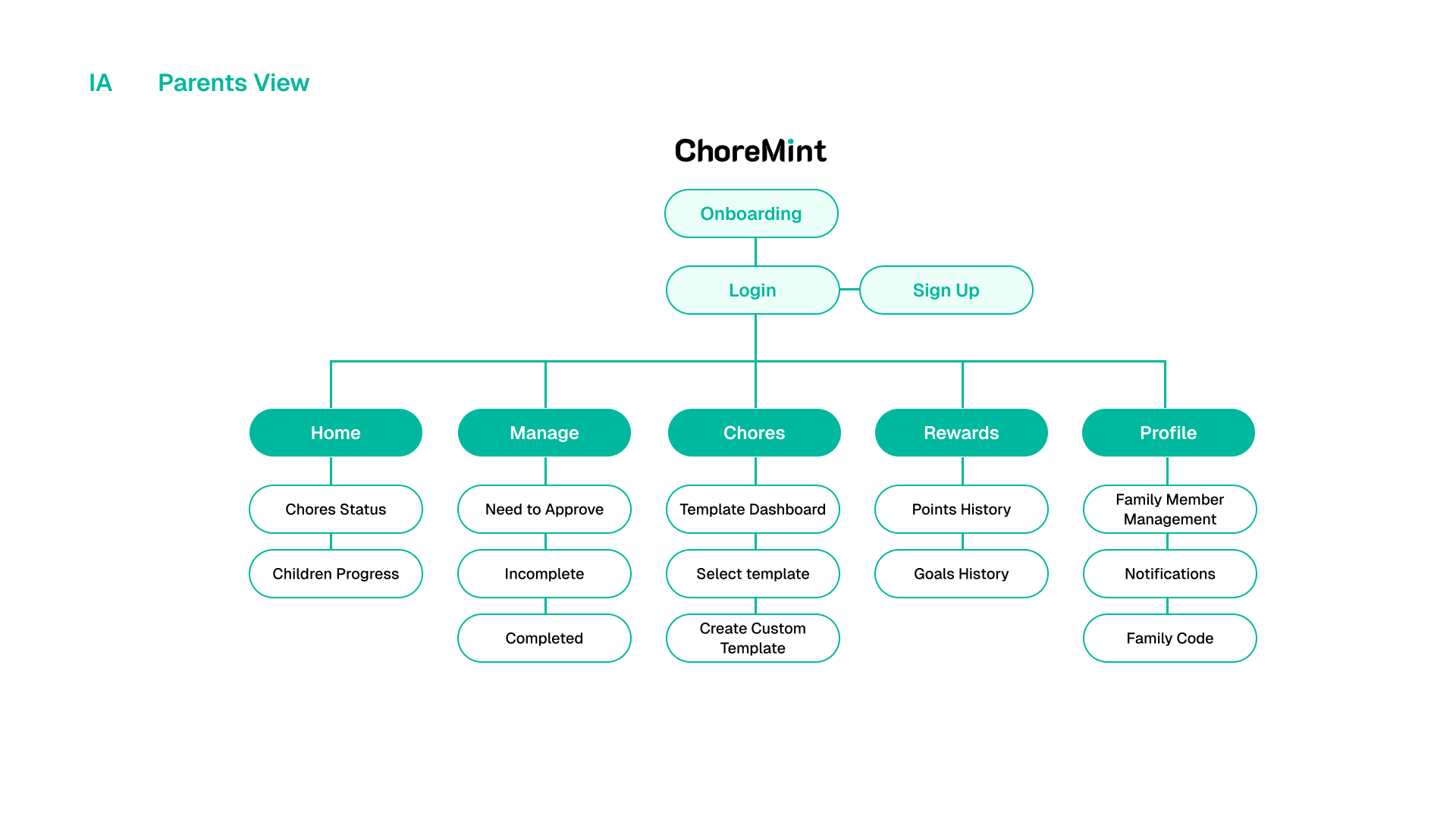
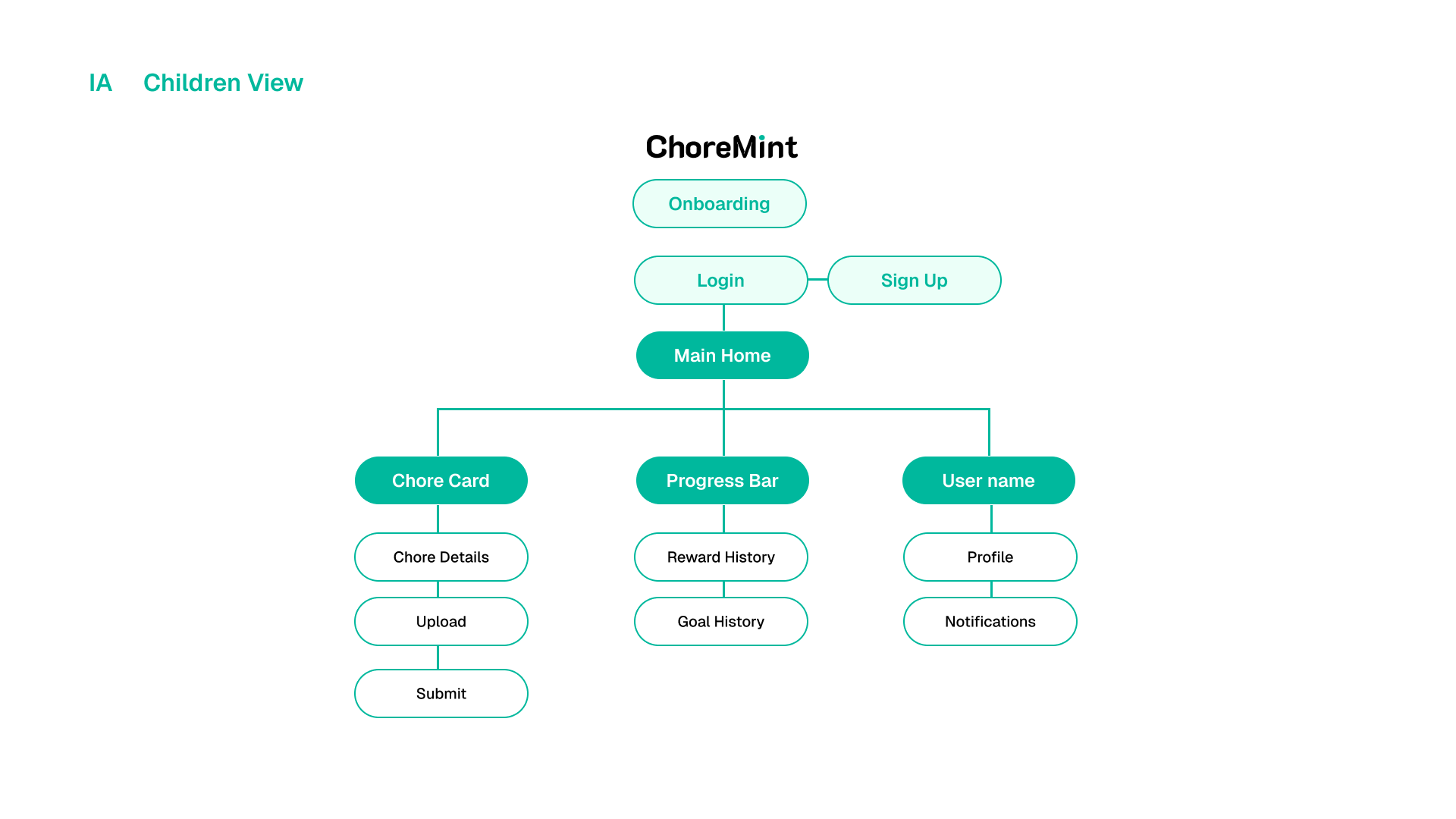
ChoreMint serves two users with fundamentally different needs.

Parent Experience

  • Assign and approve chores
  • Manage rewards and goals
  • View family-wide progress at a glance

Child Experience

  • View today's chores
  • Complete tasks with minimal friction
  • Track progress and earned rewards

Same data, different framing—to match each user's mental model.

IA Diagram 1 IA Diagram 2

Key UX Solutions

1. Quest-Based Chore System

Chores are structured as quests with clear completion criteria and rewards.

2. Progress-First Visualization

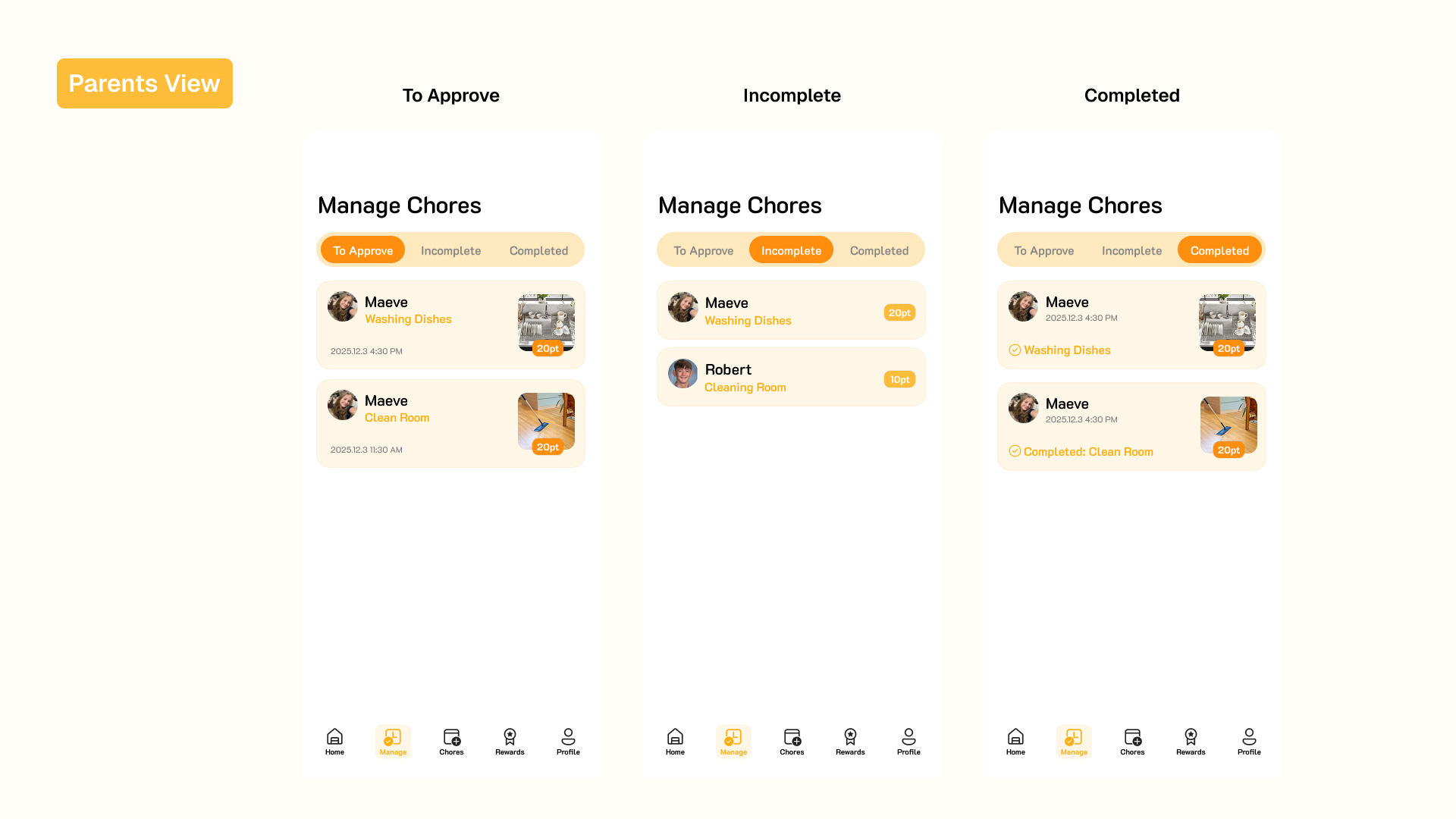
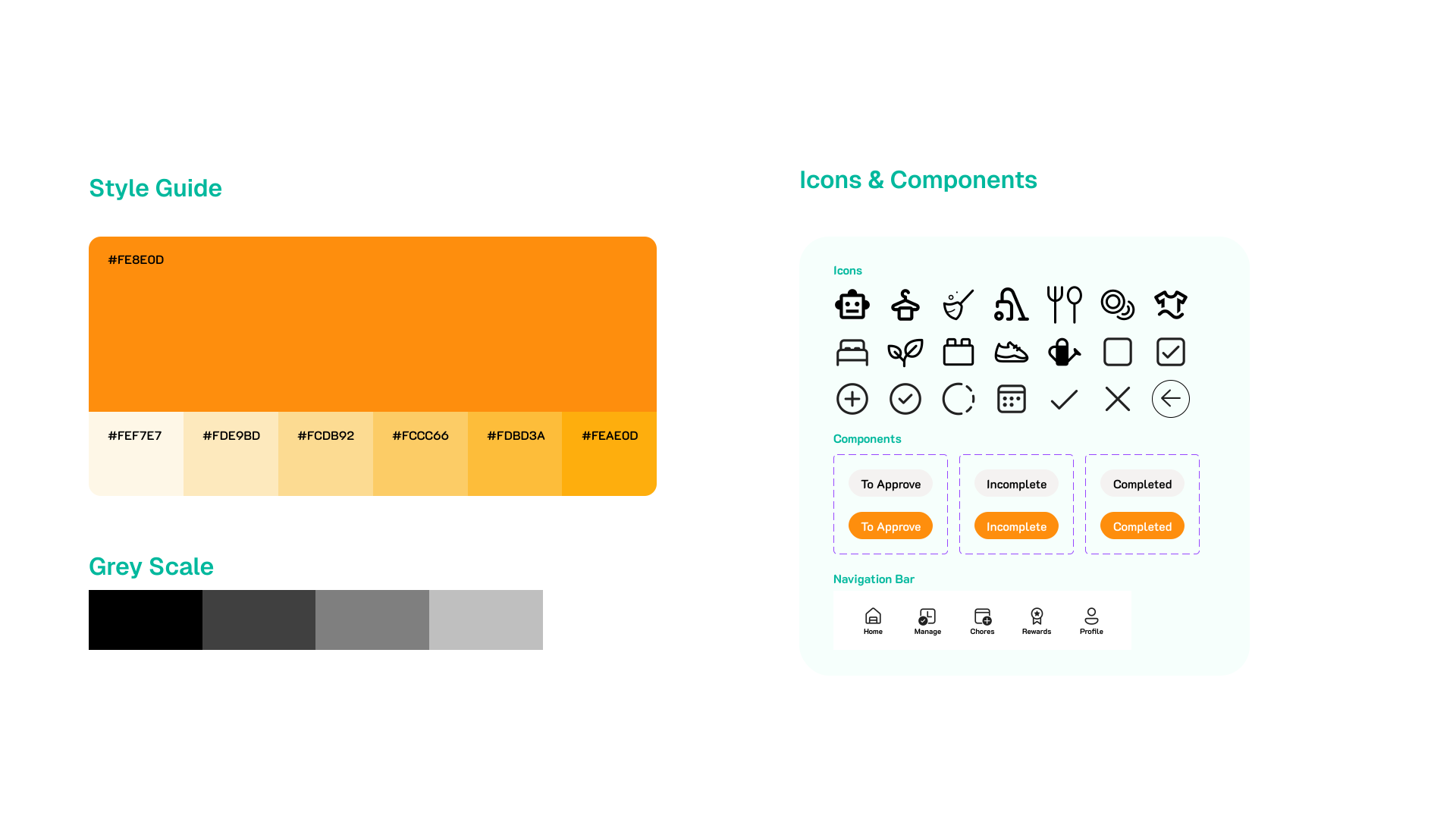
Progress states (to approve / incomplete / completed) are surfaced before task details.

Progress UI

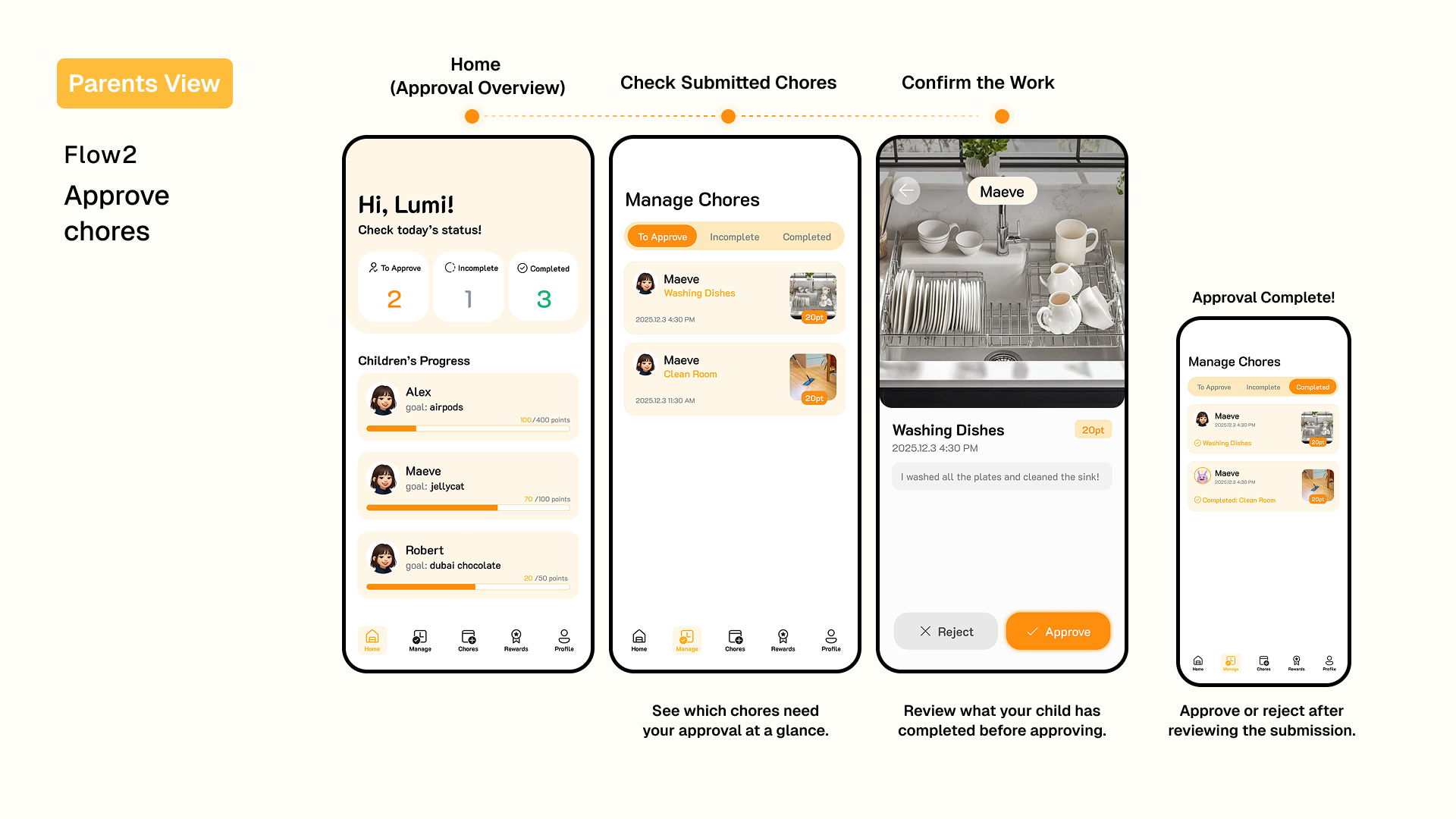
3. Approval-Centered Parent Flow

Parents act as reviewers, approving completed chores in a single, streamlined flow.

Parent Approval Flow

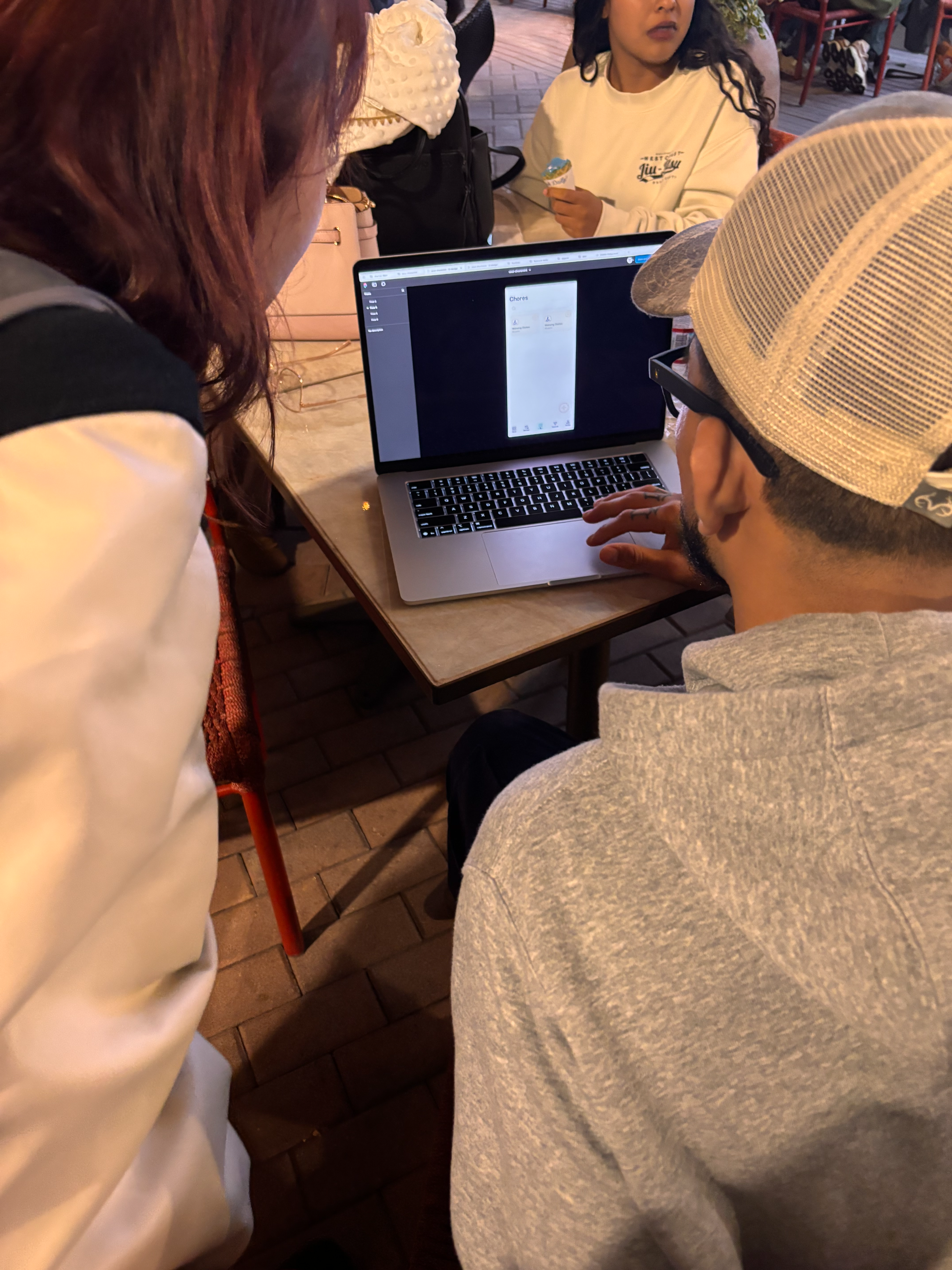
Usability Testing

Test Focus

  • Task clarity
  • Next-action visibility
  • Reward understanding

Key Issues Identified

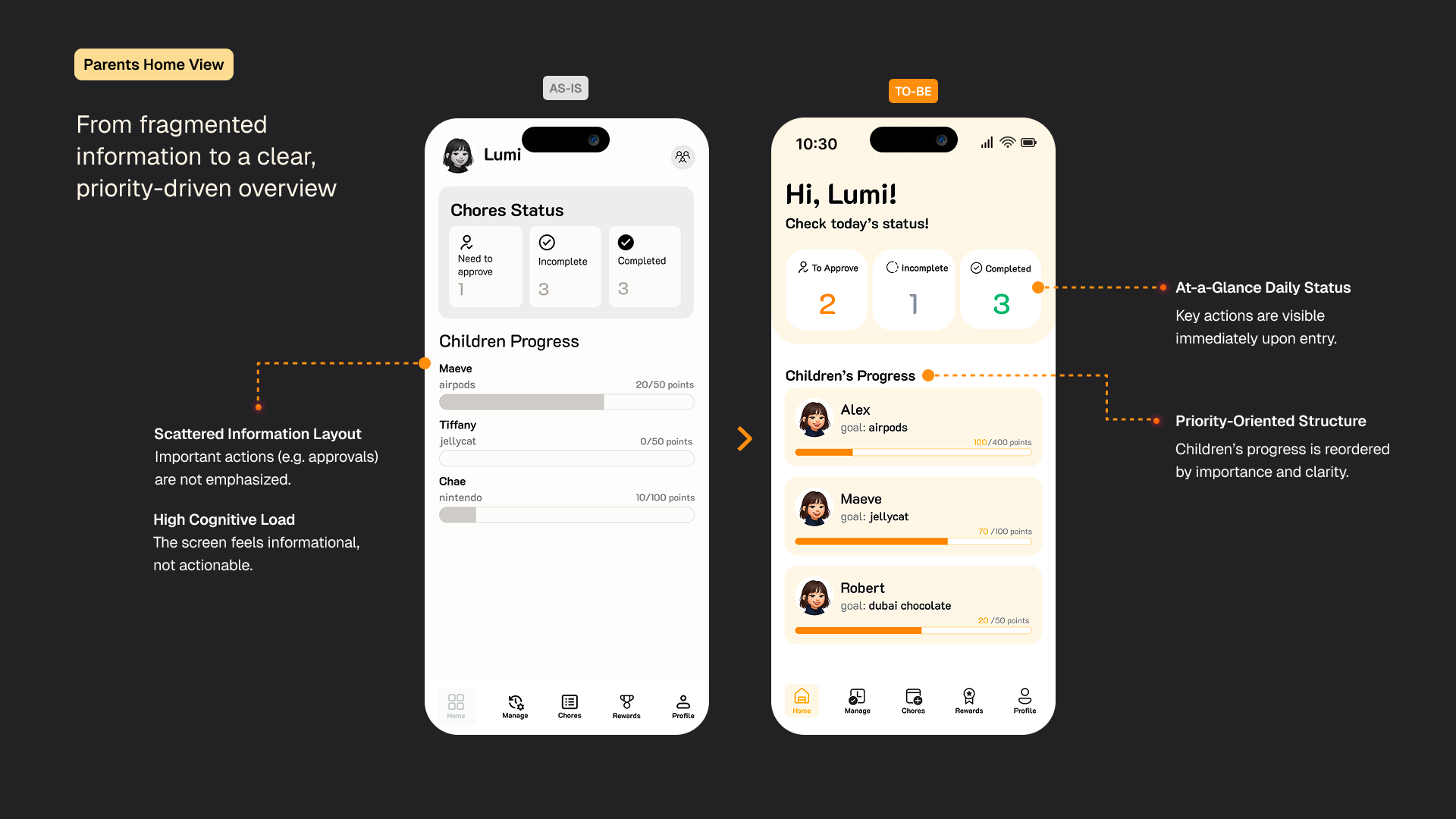
  • Scattered information increased cognitive load
  • Next actions were not immediately obvious
  • Task lists felt informational rather than actionable
Usability Testing

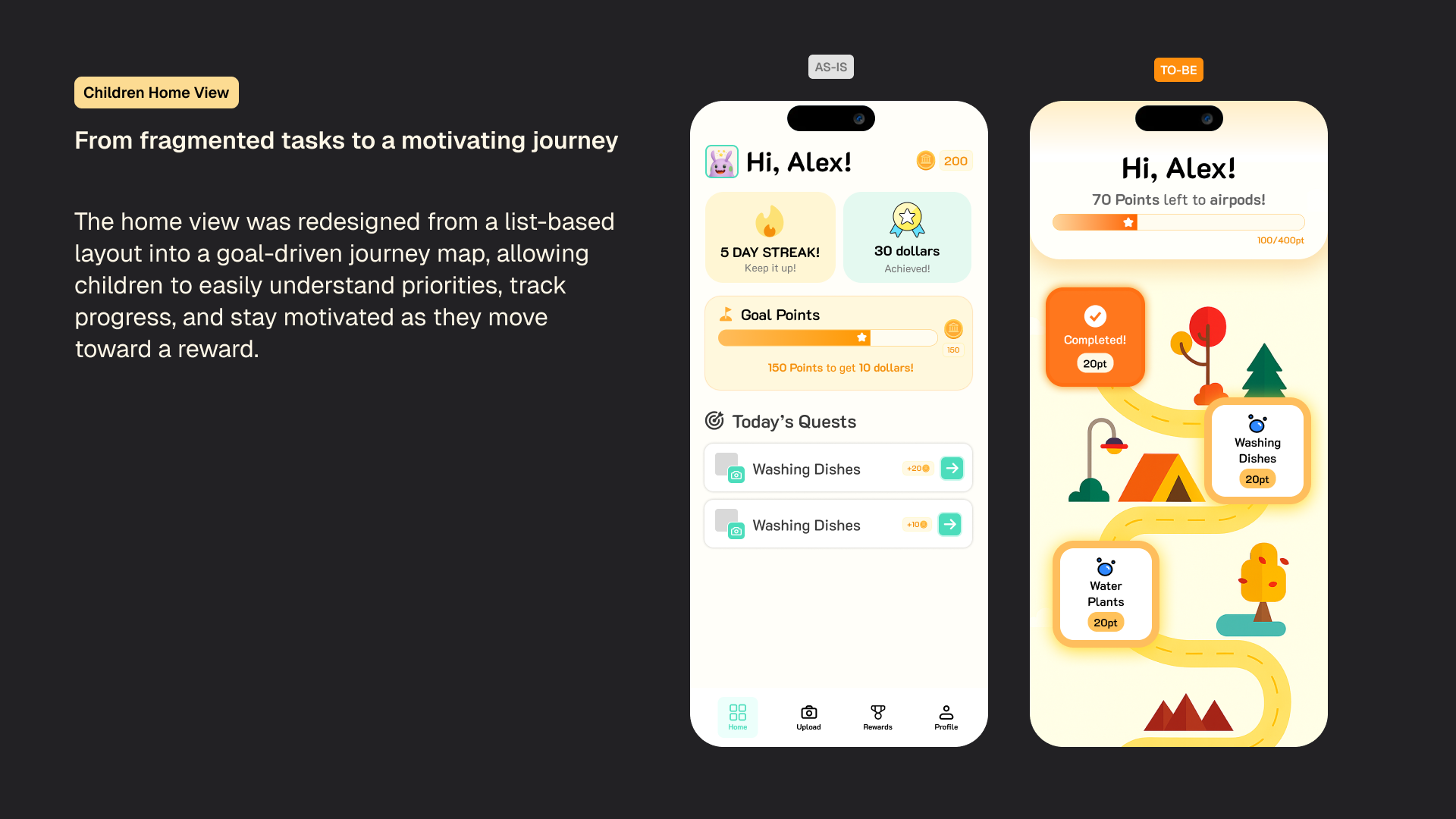
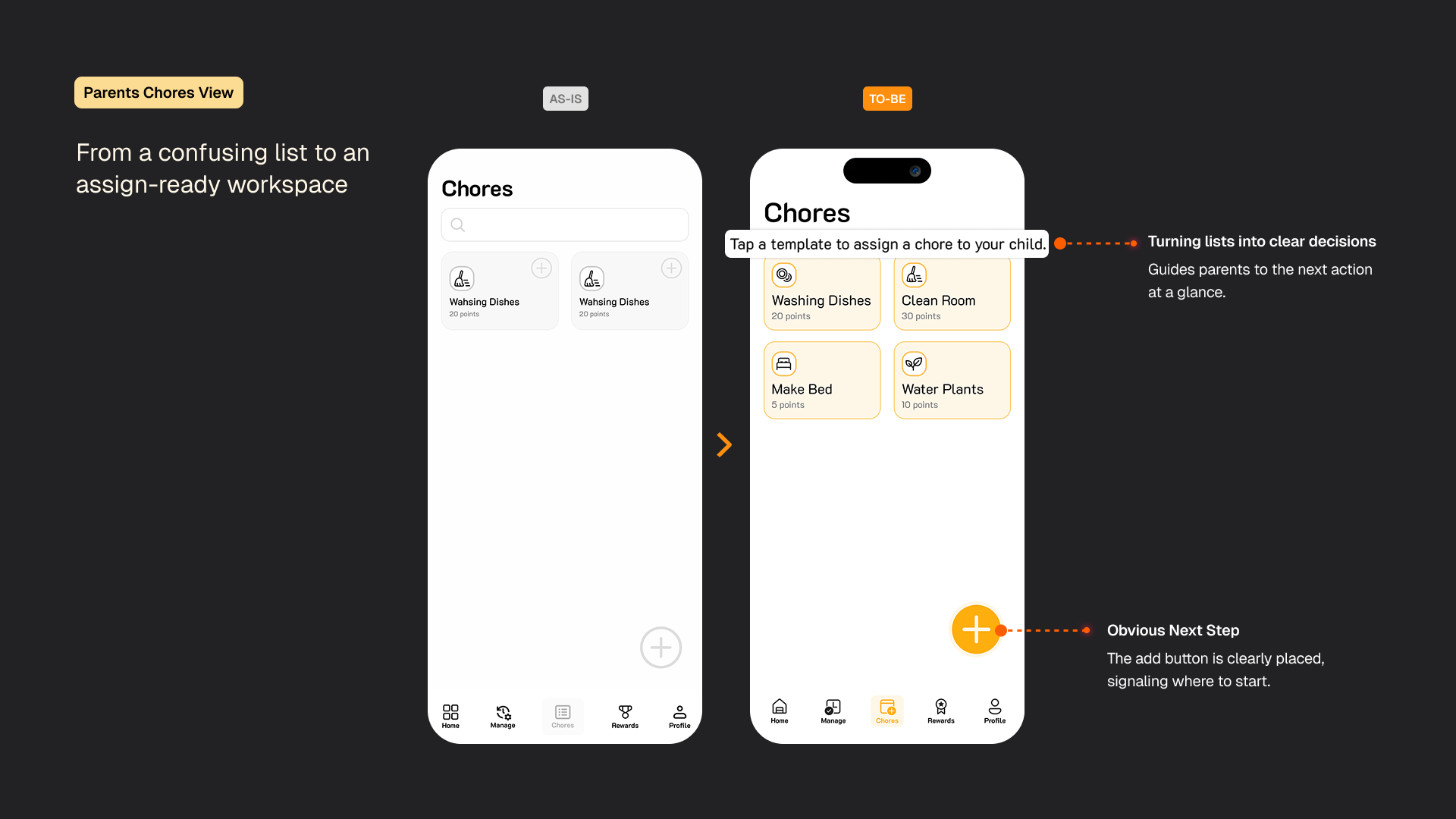
Iteration: Screen Improvements

Before

  • Fragmented task lists
  • High cognitive load
  • Delayed feedback

After

  • Priority-driven layout
  • Clear next actions
  • Immediate visual confirmation
Usability Issues AS-IS
Child Redesign
AS-IS / TO-BE Comparison

Outcome & Impact

Through system-driven UX improvements, ChoreMint shifted chores from instruction-based interactions to behavior-driven habits.

Observed impact during testing:

  • Reduced need for parental reminders
  • Increased child engagement through instant feedback
  • Clearer accountability without emotional conflict
Outcome Summary 1 Outcome Summary 2

Collaboration & Implementation

  • Owned end-to-end UX and UI design
  • Designed component-ready screens aligned with development constraints
  • Collaborated closely with developers throughout MVP implementation

Reflection

What this project reinforced

  • Behavior change requires system design, not feature accumulation
  • Multi-user products demand role-based UX framing
  • Good UX reduces emotional labor

ChoreMint strengthened my ability to design behavioral systems that balance clarity, motivation, and scalability.

Appendix · Presentation Deck

This deck was used for internal demo and concept presentation.
It documents the full product vision, UX decisions, and iteration process.